


This article explores that the real challenge is not simply one of AI adoption or agility, but of system design. Drawing on Deloitte’s findings alongside our Future@Work 2026 report, it explores four connected shifts: from ‘human + machine’ to ‘human × machine’, from efficiency to value, from static planning to orchestration, and towards a more intentional approach to human advantage. These shifts suggest that the organisations best placed to succeed will be those that treat technology, governance, culture, and workforce design as parts of a single integrated system.
Contents
1. The emerging logic of human–machine work
One of the report’s key insights is the reframing of the relationship between humans and technology. Moving beyond the familiar notion of ‘human + machine’, it argues for a model of ‘human × machine’, in which value is created through interaction rather than substitution.
This is not simply a matter of augmenting existing roles with AI tools, but of rethinking how work itself is structured.
The data underpinning this shift is striking: while nearly 60% of workers now report using AI in their day-to-day activities, only a small minority of organisations consider themselves adept at shaping these interactions. As a result, while “organisations expand AI-enabled decision-making, many find AI to be amplifying existing deficiencies instead of solving them”. Adoption, it seems, is proceeding far more quickly than workforce design.
This gap between use and understanding echoes a pattern increasingly visible across the future of work landscape. The 2026 Leadership Futures: Redefining Leadership in the Age of AI report by the Henley Centre for Leadership speaks of a “human enablement gap”, observing that “AI and digital systems are advancing faster than organisational understanding of how to use them well”.
BCG’s recent Creating People Advantage report makes a similar point, arguing that implementation at scale “depends less on deploying AI into current work and more on reshaping processes and workstreams to generate greater value from technology”.
The readiness paradox
This dynamic closely mirrors the findings of our Future@Work 2026 report, which identifies a persistent gap between organisations’ ambitions around AI and their ability to embed it effectively within day-to-day operations.
As illustrated below, organisations report high confidence in their preparedness for AI, with 86% indicating they are ‘very well’ or ‘well prepared’ for developments in AI and technology, yet simultaneously identify widespread capability gaps across skills, leadership, and governance.
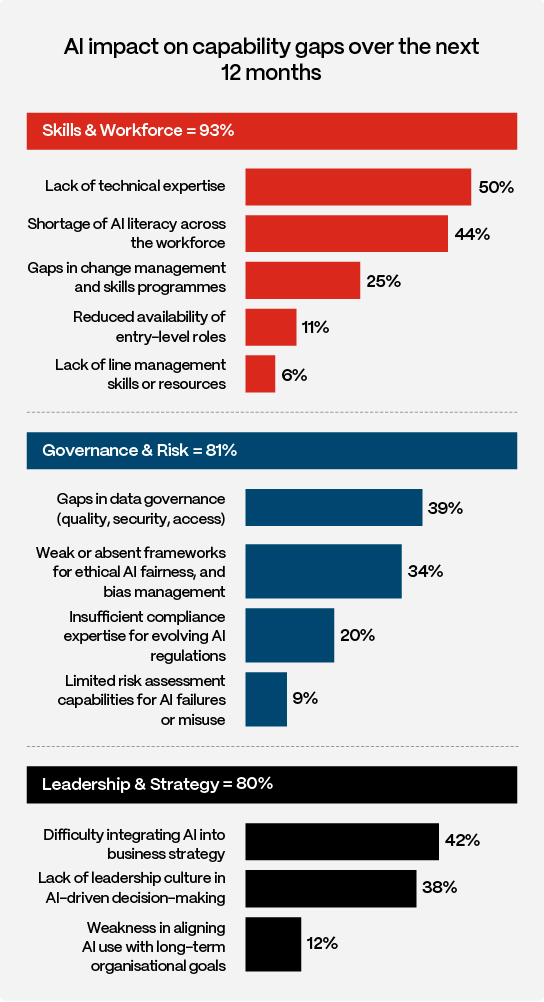
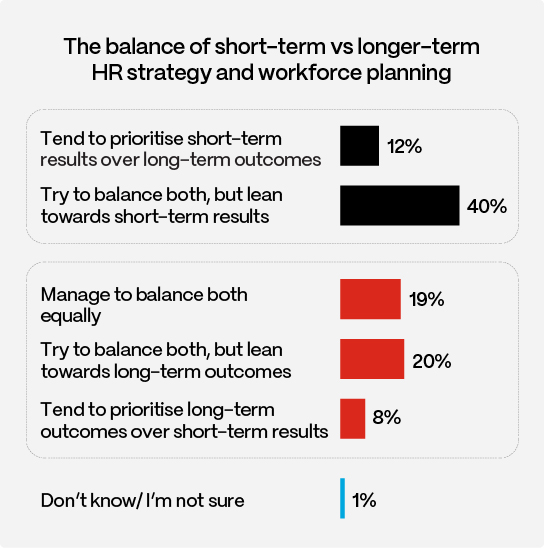
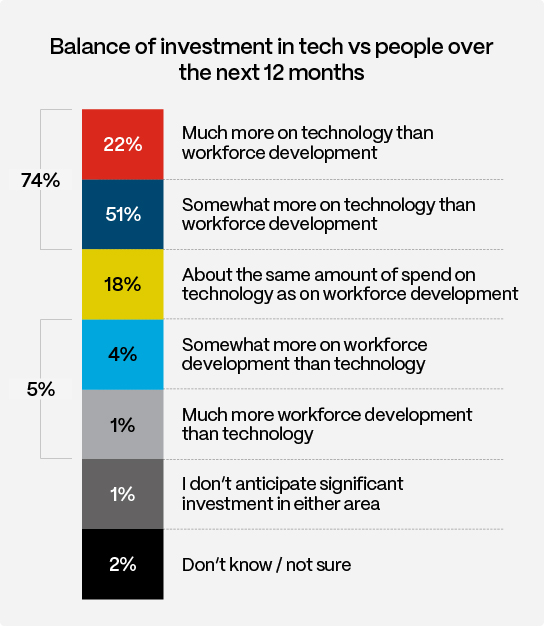
This disconnect is reinforced by short-term planning horizons and an investment model still heavily skewed towards technology rather than workforce development, creating what we describe as a “readiness mirage”.
At the same time, siloed approaches are making the problem harder to resolve. AI adoption, regulatory change, and workforce transformation require coordinated action across HR, Legal, IT, and Operations, yet these functions often remain misaligned. The result is fragmented decision-making, blurred accountability, and widening confidence gaps between senior leaders and operational teams.
In this sense, the move from “human + machine” to “human × machine” is less a destination than a challenge. It requires organisations to move beyond incremental deployment and towards intentional and integrated design.
2. Why value creation is replacing cost efficiency
A second important shift highlighted by the Global Human Capital Trends report is the move from cost efficiency to value creation. This reflects a broader rebalancing of organisational priorities, driven by demographic change and tightening labour markets.
As human capacity becomes scarcer, the challenge is no longer how to reduce reliance on human labour, but where human contribution is uniquely valuable and how it can be amplified.
This marks a significant change in how the synergy between human labour and technology is understood: for much of the past decade, automation has been framed primarily in terms of substitution, identifying tasks that can be performed more cheaply or efficiently by machines.
What is now emerging is a more selective approach, in which automation and augmentation are used not simply to reduce costs, but to reallocate effort towards higher-value activities.
Rebalancing how work creates value
Our Future@Work data supports this reframing. Organisations generally agree that AI will change roles more than it will create or eliminate them, with a clear majority anticipating role transformation rather than net job loss.
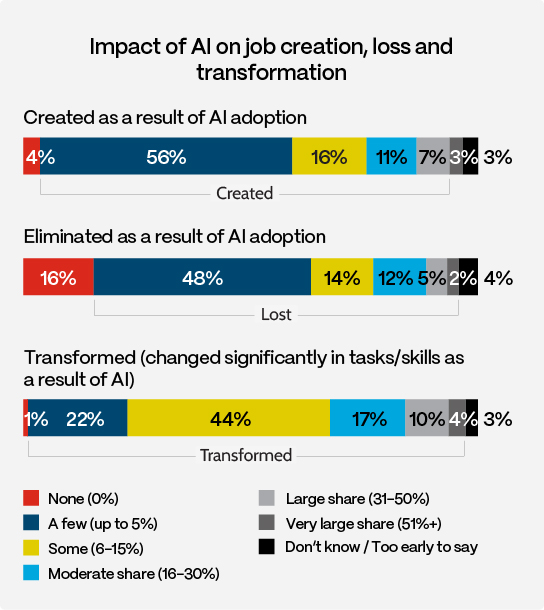
Furthermore, as shown below, organisations expect AI to reshape work primarily through productivity gains, evolving skill requirements, and the automation of routine tasks, with a significant proportion also anticipating the creation of new specialist roles.
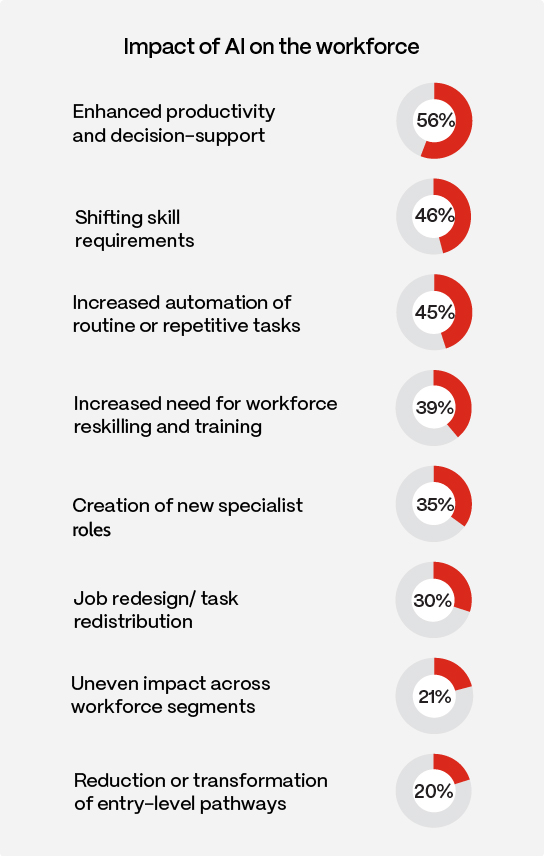
However, this shift also raises more fundamental questions about what kinds of work organisations prioritise and why, as decisions about value are becoming increasingly bound up with purpose, fairness, and long-term sustainability.
In this context, the question of value cannot be separated from the question of delivery. As businesses move towards more multidimensional forms of value creation, the challenge becomes not only identifying where value lies, but coordinating the people, technologies, and processes required to realise it. It is this shift that brings the role of orchestration into sharper focus.
3. Orchestration as core organisational capability
One of the most forward-looking features of Global Human Capital Trends is its focus on orchestration. As strategy and execution begin to converge, organisations can no longer rely on fixed plans, stable structures, or clearly bounded roles. Instead, they are required to coordinate capabilities, capacity, and decision-making in real time, responding dynamically to shifting conditions.
This invites a growing emphasis on agility and responsiveness. Unsurprisingly, a large majority of leaders now identify speed and adaptability as their primary sources of competitive advantage, overtaking scale as the dominant organising logic. At the same time, traditional functional boundaries are coming under pressure, with many organisations recognising the need to move beyond rigid silos and towards more fluid configurations.
The capability gap in practice
Our own findings echo this shift: a growing number of employers are rethinking how work is organised to strengthen resilience, workforce retention, and employee value propositions.
Respondents pointed to flatter structures, more collaborative ways of working, flexible skill-led career architectures, and leaner decision-making processes. Several also highlighted the changing role of HR, which in many organisations is moving closer to the strategic heart of the business and is leading cross-functional integration.
In this context, orchestration emerges as a central capability, involving not only aligning people and technology, but also managing interactions across the organisation so that information flows effectively, and that decisions are made at the right level and at the right time.
Yet our research also suggests that the capacity for this kind of adaptive orchestration remains unevenly distributed. Only a minority of organisations, often estimated at 20–30%, are genuinely proactive and strategically prepared for change. The rest remain reactive, under-resourced, and uncertain, often struggling to plan even a year ahead.
4. Why orchestration requires a shift to system design
If orchestration is emerging as a core capability, then the next step is to understand what enables it, inviting a critical shift from coordination to design.
This is where, according to Deloitte, a broader risk becomes visible: when organisations evolve without a coherent redesign of the systems that structure work, change does not unfold as a coordinated transformation, but as a series of disconnected adjustments. Technology, processes, culture, and governance shift at different speeds, often in response to immediate pressures rather than a shared direction, resulting in a gradual disintegration of organisational coherence.
This yields several key insights for leaders.
- Decision-making as an integrated system
As AI becomes more embedded in decision processes, organisations need to clarify how judgement is shared between humans and machines, how accountability is maintained, and how escalation pathways are defined. Our report underscores the urgency of this challenge: 38% of organisations identify a lack of leadership confidence in AI-driven decision-making, alongside 39% citing gaps in data governance. - Fluid structures with clear alignment
Organisational structures need to become more fluid without losing coherence. This may involve reconfiguring functions around outcomes rather than activities, and enabling more dynamic allocation of resources, while ensuring that flexibility does not come at the expense of alignment. - Governance by design, not compliance
In a context where risks are emerging in new forms, including the erosion of digital trust and the accumulation of what the report terms “cultural debt”, governance becomes a design challenge, centred around embedding safeguards, feedback loops, and ethical considerations into the fabric of the organisation. Our data reinforces this point, revealing a notable 'two-speed' approach to compliance: organisations treat AI governance as a strategic imperative, while other mandates such as pay transparency are handled more operationally. This bifurcation creates uneven maturity across compliance domains and risks underestimating the impact of what our report terms 'sleeper' mandates.
In short, a purposeful move towards orchestration demands a corresponding shift towards intentional system design. Responding to complexity is not enough: organisations must actively shape the conditions under which complexity can be managed.
What does ‘human advantage’ mean in practice?
At the centre of Deloitte’s argument is the idea that the future of work will be defined by a uniquely human advantage. This is an important and necessary corrective to narratives that position technology as the primary driver of value.
However, it also invites a further question: what kind of human advantage are organisations seeking to cultivate?
This is where the concept of “human sustainability”, introduced in the report’s concluding section, becomes particularly relevant. By emphasising the need to create value for people as human beings, it expands the conversation beyond performance to include wellbeing, belonging, and purpose. Echoing the findings of the World Economic Forum’s 2026 Four Future of Jobs in the New Economy white paper, the Deloitte report speaks of a “human edge”, emphasising capabilities such as judgement, creativity, and adaptability.
Yet it also creates space for a broader conversation: if human qualities are now the primary source of differentiation, then the future of work is not only about how humans complement machines, but about the conditions under which those capabilities can meaningfully develop and be deployed.
This perspective aligns closely with the Future@Work report’s emphasis on “good work” as a strategic objective, with long-term organisational performance becoming intrinsically linked to the quality, sustainability, and inclusiveness of work itself.
From capability to design
Building on this idea, the challenge for organisations is not simply to leverage human capabilities, but to design environments in which those capabilities can thrive. This involves aligning business objectives with broader considerations of inclusion, development, and long-term value creation. ‘Human advantage’, in this sense, is best understood a dynamic outcome of how work is organised and experienced, rather than a static asset.
As our report shows, a growing number of employers now recognise that productivity gains alone are insufficient as a measure of success, and that long-term performance depends on aligning workforce strategy with engagement, inclusion, and sustainability.
Our data also highlights a clear shift in what organisations and employees value, with meaningful work, culture, and employee influence now playing a central role in attraction, retention, and engagement, alongside growing investment in wellbeing and inclusion.
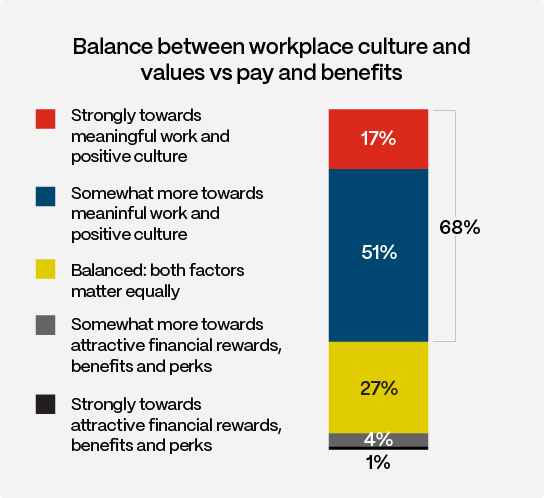
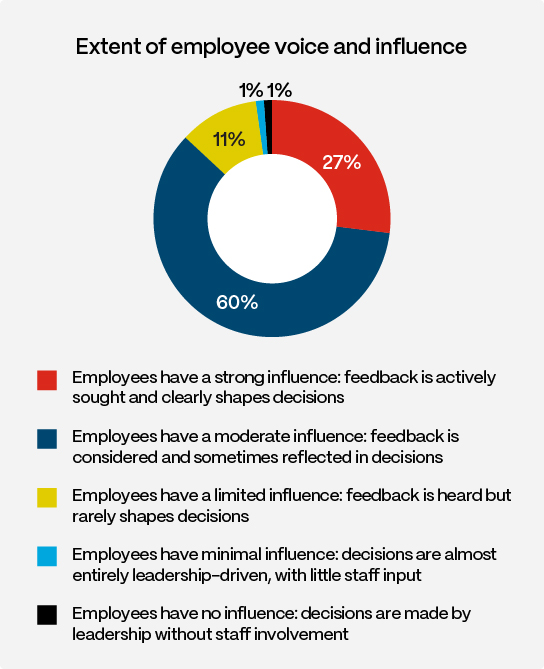
These trends suggest that the ‘human advantage’ is not simply a matter of capability, but of design: it emerges from the interaction between organisational structures, cultural norms, and the lived experience of work. The organisations most likely to cultivate a genuine 'human advantage' will be those that treat these factors not as peripheral benefits, but as core elements of organisational design.
What organisations need to do next
Deloitte’s Global Human Capital Trends report offers a valuable framework for understanding the pressures currently reshaping the world of work. Its identification of tipping points, its emphasis on human–machine interaction, and its focus on orchestration capture important aspects of the emerging landscape.
At the same time, the implications of these shifts extend further than the report itself suggests. Organisations are not simply being asked to move faster or to balance competing priorities more effectively, but to rethink the fundamental systems through which work is organised, governed, and valued.
In this respect, the findings of the Future@Work 2026 report point towards a next stage in the evolution of the debate: moving from identifying trends and tensions to actively designing organisational systems capable of integrating them.
Our data underscores both the urgency and the difficulty of this transition. While organisations widely recognise the need for long-term capability-building, many remain focused on short-term measures. Without a sustained reorientation, AI risks amplifying the structural vulnerabilities created by short-term thinking rather than resolving them.
This is a more demanding task. It requires a shift from incremental adaptation to intentional design, it involves confronting structural misalignments, addressing the risk of organisational drift, and redefining what it means to create value in a context of increasing complexity.
Ultimately, the organisations that succeed will not be those that adopt new technologies most quickly, but those that are able to integrate those technologies into coherent, adaptable, and human-centred systems. Deloitte’s “tipping point” is therefore an opportunity not simply to respond to change, but to shape it.
As our report concludes, outcomes are not predetermined by the technology itself, but by the approach businesses take to adoption and workforce design.
The organisations that invest in sustained people capability, cross-functional governance, and intentional system design, rather than defaulting to reactive, technology-first responses, will be best placed to turn today's tipping point into tomorrow's strategic advantage.
These are not abstract challenges. Many organisations are already grappling with how to redesign work, integrate AI, and build the capabilities required to navigate increasing complexity. If these themes resonate, we would welcome a conversation about how they are playing out in your organisation and how different approaches are being tested in practice. Join the Future of Work Hub community to stay connected and explore our latest insights.
