


Misinformation and disinformation are usually treated as societal, political or geopolitical risks. In an AI-enabled information environment, they are also becoming workforce risks. As generative tools make persuasive synthetic content easier to produce and harder to verify, employers face growing challenges around reputation, employee relations, data governance, legal exposure and AI-assisted decision-making.
The old problem of new information technologies
A donkey’s body, fish-like scales, and a distorted human face: this was the ‘papal ass’, one of early modern Europe’s stranger media sensations. Supposedly discovered in the River Tiber in Rome in 1523, the creature was presented in pamphlets as a divine warning against corruption in the Catholic Church.
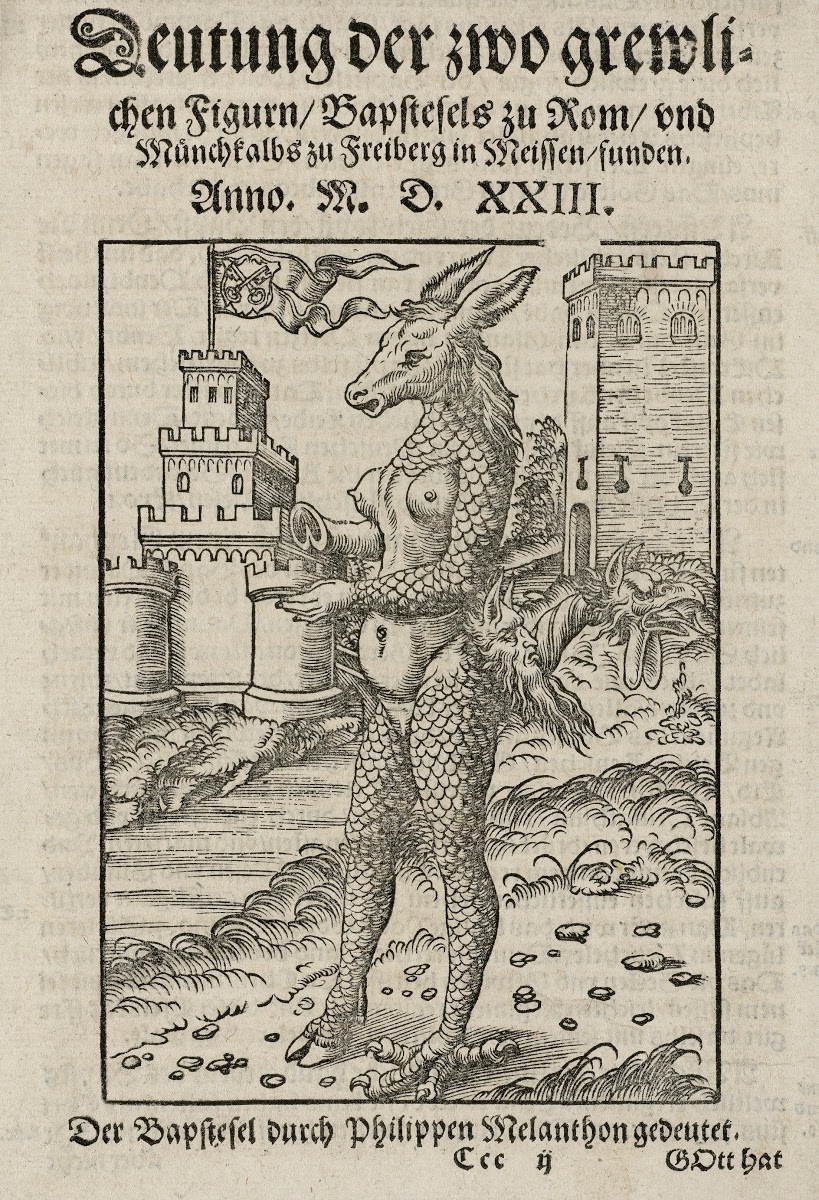
The creature never existed, yet the story spread rapidly, as woodcut illustrations reproduced in cheap pamphlets were carried through Europe’s expanding communication networks. This happened because the printing press had transformed the geography and pace of information: rumours that might once have remained local could now be replicated at scale, allowing sensational claims to travel faster than verification.
Five centuries later, generative AI and algorithmic distribution platforms are producing a comparable disruption. Persuasive synthetic text, images, and audio can be created cheaply and at scale, tailored for virality, and distributed globally within minutes. The technologies differ, but the institutional challenge remains strikingly familiar.
The World Economic Forum’s recent Global Risks Report 2026 identified misinformation (false information shared without the intent to deceive) and disinformation (information deliberately fabricated and spread to deceive) as the most severe global risk linked with technology. While this challenge is generally framed in democratic or geopolitical terms, this article explores a less examined implication: how misinformation and disinformation are increasingly becoming an operational risk for employers. As the boundaries between social discourse and workplace perception blur, information integrity becomes a matter of governance rather than public relations.
AI as amplifier and feedback mechanism
Artificial intelligence has accelerated and automated existing forms of misinformation, as generative systems lower the barrier to producing plausible narratives, making synthetic images and text appear authoritative and persuasive, while weakening authenticity cues. As Nina Schick showed in her book Deep Fakes and the Infocalypse, these tools are beginning to enable the industrial-scale production of synthetic media capable of reshaping information environments. The WEF Global Risks report similarly warned against the information risks linked with the rise of GenAI: lowering “the barriers for content production and distribution” can potentially enable “threat actors, state agencies, activist groups, and individuals who may or may not have criminal intentions” to “automate and expand disinformation campaigns, greatly increasing their reach and impact”. As a result, the report concludes, “within a decade, deepfakes and AI-generated misinformation could become ubiquitous, making it impossible for citizens to distinguish truth from deception”.
Large language models are trained on vast volumes of online material. Where that material is saturated with distortion, bias or fabrication, models may reproduce or amplify the same patterns. Over time, a circular dynamic can emerge: misleading AI-generated content enters the online ecosystem, that ecosystem supplies data for later models, and the feedback loop strengthens. The risk is less like a single error and more like a map repeatedly redrawn from other maps, rather than checked against the terrain: each version may look authoritative, but small distortions can become embedded until they are treated as features of reality. As synthetic content becomes cheaper to produce and harder to verify, the informational foundations on which organisations rely become less stable.
This is precisely what the American philosopher Lee McIntyre referred to as the ‘post-truth’ condition, whereby misleading narratives circulating more easily than verified knowledge can erode the shared factual ground on which institutions depend. The 2025 Edelman Trust Barometer rang the same alarm bells, noting that, according to 63% of respondents globally (and up to 75% in some markets), “it is becoming harder to tell if news is from respected media or an individual trying to deceive people”.
From societal threat to organisational variable
This logic poses a significant problem for the future of work. Even though misinformation is generally framed as a political or cultural problem, it now brings about an increasingly serious, if less often explored, set of three challenges for employers.
