


The European Court of Justice ("ECJ") has issued an important judgment in EUIPO v Nowhere (Case C-337/22 P), confirming that earlier rights relied upon in trade mark opposition and invalidity proceedings must continue to exist and produce legal effects at the time the EUIPO adopts its decision. By contrast, under UK trade mark law, the established principle is that the relevant assessment date in opposition proceedings is the filing date of the contested application, as confirmed in RIVIERA (O/214/03) and BUSINESS ZONES (O/364/07). The decision therefore highlights a clear divergence between EU and UK trade mark law in the temporal assessment of earlier rights.
The ruling overturns the General Court's earlier judgment and reaffirms the EUIPO's long-standing practice, providing welcome legal certainty for trade mark practitioners across the EU. While arising in a Brexit context, the decision carries wider significance, shaping the strategic use of earlier rights in opposition and invalidity proceedings more generally.
This summary outlines the factual background, procedural history, the ECJ's reasoning, and the key practical implications of this landmark decision.
Background
The case concerned Nowhere Co., Ltd ("Nowhere"), a Japanese company behind the BATHING APE streetwear brand, which opposed an EU trade mark application for the figurative sign "APE TEES", filed on 30 June 2015 by Mr Junguo Ye for goods and services in Classes 3, 9, 14, 18, 25 and 35. The contested application was, in essence, a carbon copy of Baby Milo, the BATHING APE brand's well-known mascot character, which celebrated its 25th anniversary in 2024.
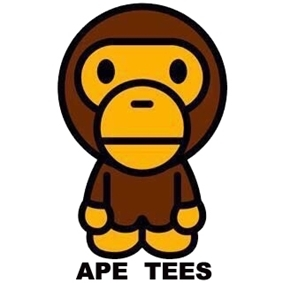
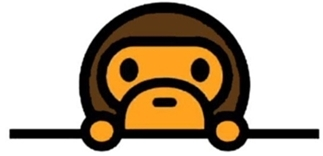
By the time the dispute reached the EU courts, Nowhere relied on three earlier non-registered figurative trade marks depicting monkeys which had been used in the course of trade in the United Kingdom. The opposition was brought under Article 8(4) of Regulation (EC) No 207/2009, which allows an opposition to be based on earlier non-registered signs where, under the applicable national law, the proprietor is entitled to prohibit use of a later mark. In the UK context, this protection arises through the common law tort of passing off. The images of the unregistered signs relied upon are shown below.


The opposition had initially also relied on two international registrations designating the UK. However, those rights were not properly substantiated in the evidence and were therefore excluded from consideration by the Opposition Division at first instance.
The dispute unfolded against the backdrop of Brexit. The contested EU trade mark application was filed in 2015, well before the referendum, at a time when the UK remained fully integrated within the EU trade mark system. During the Withdrawal Agreement transition period (1 February 2020 to 31 December 2020), EU law continued to apply in the UK. However, the Withdrawal Agreement did not expressly address how pending EUIPO opposition proceedings based on earlier UK rights were to be treated following the UK's departure from the EU.
EUIPO Proceedings and General Court
The procedural history was complex. Nowhere filed its opposition on 8 March 2016, which was rejected by the Opposition Division on 20 September 2017. Nowhere appealed on 17 November 2017, but the Second Board of Appeal dismissed the appeal on 8 October 2018, before revoking that decision on 17 July 2019 due to an obvious error. On 10 February 2021 (after the expiry of the Brexit transition period), the Board issued a second decision dismissing the appeal, holding that UK rights could no longer serve as a valid basis for opposition under Article 8(4).
Nowhere subsequently appealed to the General Court, arguing that the relevant date for establishing an earlier right was the filing date of the contested application. In its judgment of 16 March 2022, the General Court upheld the appeal, relying on BROWNIE (T-598/18) and finding that relative grounds for refusal must be assessed as at the filing date, such that the loss of protection for the earlier sign after that date was irrelevant to the outcome of the opposition. The EUIPO then appealed to the ECJ, supported by Germany, the opponent and INTA, advancing a single plea in three parts:
- that the General Court had misinterpreted Article 8(4);
- failed to properly account for the legal consequences of Brexit and the principle of territoriality; and
- provided inadequate reasoning.
ECJ Decision
The ECJ upheld EUIPO's appeal and dismissed Nowhere's action, finding that the General Court's reliance on BROWNIE (T-598/18) rested on an incorrect premise unsupported by the wording, context or objectives of Article 8(4).
Turning first to the wording of Article 8(4), the Court noted that while the "anteriority" requirement in Article 8(4)(a) expressly refers to the filing date, Article 8(4)(b) provides that the earlier sign must "confer on its proprietor the right to prohibit" the later mark, wording framed in the present tense and without reference to any specific point in time. The same is true of the provision that "the trade mark applied for shall not be registered," which is likewise expressed in the present tense.
The Court therefore concluded that, although ownership of the earlier right must be assessed as at the filing date, the right must also confer the power to prohibit use of the contested mark at the time the opposition is filed and continuously until the EUIPO adopts its decision.
This interpretation was supported by the purpose of opposition proceedings, namely, to allow proprietors of earlier rights to prevent the registration of conflicting marks. Where the earlier right no longer enjoys protection, its essential function can no longer be adversely affected by registration of the EU trade mark. The Court accordingly confirmed that the earlier right must continue to exist "until the date on which EUIPO rules on the opposition based on that right, including at the stage of the appeal before the Board of Appeal".
Applying the principle of territoriality, under which trade mark protection is limited to the territory in which the right exists, the Court held that EU trade marks registered after Brexit would produce no effects in the United Kingdom, meaning no actionable conflict could arise.
The Court also rejected the General Court's conclusion that Nowhere retained a "legitimate interest" based on potential conflict during the period between filing and the end of the transition period, noting that Nowhere remained free to pursue infringement proceedings before the UK courts during that time.
Conclusion
The Nowhere ruling has significant practical consequences extending well beyond the Brexit context, affecting reliance on earlier rights in opposition and invalidity proceedings before both the EUIPO and national EU Member State offices. Its immediate effect is one of continuity: the EUIPO's established practice from pre-2022 has been confirmed, meaning that revocation, surrender or expiry of earlier rights during proceedings will remain relevant and may ultimately bring an action to an end.
The decision is likely to have particular impact where earlier registrations become vulnerable to revocation for non-use during the lifetime of EUIPO proceedings, for example, once a mark reaches the five-year non-use period or where commercial use ceases.
In everyday terms, rights holders should expect more tactical attempts to prolong proceedings through using the entire cooling off period, appeals, requests for stays and other procedural steps, allowing parties additional time to challenge earlier rights on non-use grounds.
The judgment also has implications for trade mark opposition proceedings relying on earlier rights based on registered and unregistered designs (with maximum protection terms of up to 25 years and three years respectively). If such rights expire during the course of proceedings (a realistic scenario, particularly for unregistered designs) the action may now fail for lack of an earlier right continuing to subsist until the time of the EUIPO decision.
This decision should be read alongside Indo European Foods (C-801/21 P, "BASMATI") and Shopify (C-751/22 P, "SHOPPI") as part of an emerging line of CJEU authority addressing the temporal assessment of earlier rights in EU trade mark proceedings. In Indo European Foods, the Court confirmed that the loss of an earlier right during proceedings does not automatically deprive a party of a legitimate interest in maintaining an appeal before the EU courts. By contrast, Shopify — currently pending before the ECJ, raises the question of whether relative grounds, including acquired distinctiveness through use, must be assessed by reference to the circumstances existing at the filing date of the contested application and/or at the date of the EUIPO's decision.
Nowhere provides important clarification within this developing framework. The judgment confirms that, although proceedings may continue notwithstanding the subsequent loss of an earlier right, an opposition can ultimately succeed only where that earlier right still exists at the time of the EUIPO's final decision. In practical terms, this clarification is likely to have direct implications for the pending SHOPPI appeal, strongly suggesting that the appeal may ultimately fail before the ECJ.
A final point of practical relevance for trade mark practitioners is that, although the opposition failed on relative grounds, the factual circumstances may still justify strategic reconsideration. Given the apparent similarity between the signs and the potential reputation of the NOWHERE BATHING APE brand, practitioners may wish to consider whether a post-registration invalidity action based on bad faith could be viable. In addition, the illustration of Baby Milo would attract automatic copyright protection in the UK and in EU member states. Given the lengthy duration of copyright protection, if Nowhere is able to establish its ownership of the copyright in the Baby Milo mascot that may provide another option for protection in both the UK and in EU member states. Such protection could arise under copyright, where reproduction of Baby Milo's combination of visual features without permission could amount to copyright infringement. EU trade mark law also permits reliance on earlier copyright as a basis for invalidity (although unlike the position in the UK, in the EU earlier copyright interests cannot be relied upon as earlier rights for the purpose of opposition).


