


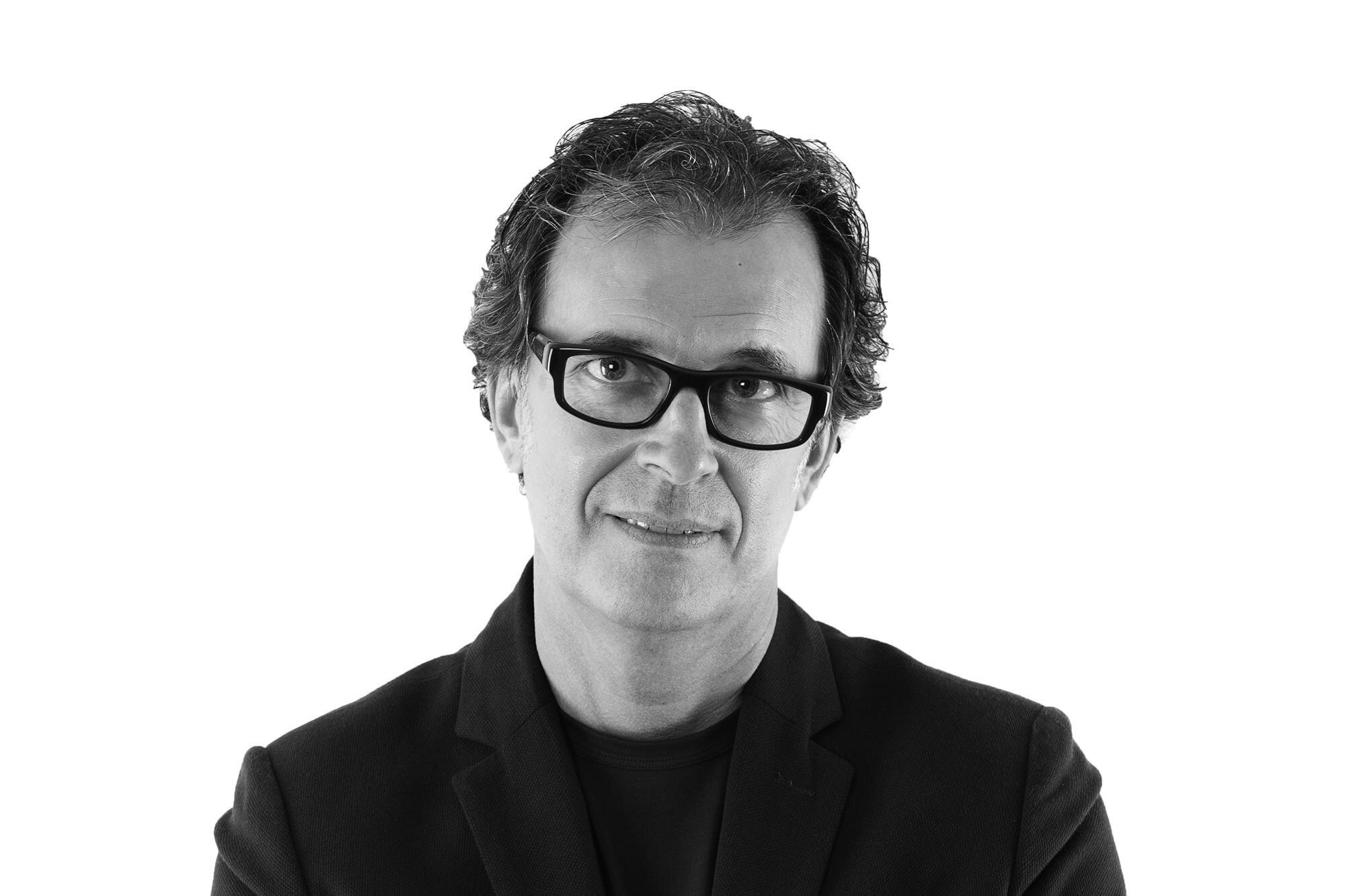
In Conversation With…Neil Usher
Series 1: Podcast 4
Lucy Lewis: Hello and welcome to the Future of Work Hub’s ‘In Conversation with…’ podcast.
I’m Lucy Lewis, a partner in Lewis Silkin’s’ employment team and in this podcast series I’ll be hosting exclusive discussions with innovators, business leaders and thought leaders to explore their perspective on what the future of work holds.
The pandemic has accelerated longer term societal, economic and technological trends, giving us a unique opportunity, a once in a generation challenge to re-think who, how, what and where we work. And today, we’ll be focussing on the where we work – the really hot topic of the moment, by talking about the future of the office and our workspaces.
And I’m delighted to introduce our guest speaker today, Neil Usher. I know from being involved in previous future of work events that Neil is quite simply one of the best people we could have to lead us through a discussion on the opportunities and constraints ahead of us, when we consider the future of our workspaces.
Neil has been in the workplace industry as a property workplace and change leader for 30 years, he has a really impressive CV including time as workplace director for Sky, Rio Tinto and Warner Brothers. He’s now a consultant, a brilliant blogger, author of two books and chief workplace and change strategist for GoSpace AI.
Neil Usher: Hi, it’s great to be here. Thank you for the invitation.
Lucy Lewis: So, we’re going to start with the pandemic, the thing on everybody’s lips. But actually, the office has always been quite a hot topic when it comes to the future of work. We’ve tended to focus on things more like occupancy, desk utilisation, property prices. We spent quite a lot of time talking about co-working spaces. But it seems that the pandemic has shifted that conversation, and now we’re asking, well, what is the very purpose of the office?
Impact of the pandemic on office spaces
I wonder what your thoughts are on the impact of the pandemic? How it’s making us rethink office space?
Neil Usher: I think you’re very much right when you say we focus on it quite a bit. The last sort of 12 months or so, I don’t think we’ve ever seen as much sort of online content about the future of the office, what it means for us, what its purpose is? I think we do that because it’s tangible, you know we can see it, feel it, touch it, smell it, it’s very much sort of part of our working lives but, I do think in the last year, we’ve probably spent too much time thinking about physical space, and not enough time thinking about the cultural drivers for how we might use it.
I think it’s important to remember that, in the last 12 months as well, we’ve gone from one safe harbour, with everyone in the office, at least theoretically everyone in the office, that’ll crop up again in this discussion, but to another safe harbour with everyone out of the office and at home. And much of the talk now is about sort of a blend or a mix of the two, this idea of hybrid, which actually isn’t a safe harbour. There’s no case studies, there’s no best practice or even good practice that we can draw on to understand this. So, I think that it’s really important to understand as well that it’s a hybrid organisation that creates hybrid working, which necessitates a hybrid workplace. It doesn’t work the other way round.
A physical workplace is actually quite a long way downstream in our thinking, and it’s really important to understand that the organisation itself and what sort of reinvention is needed for the organisation rather than just focussing purely on the workplace. Because, changing the workplace, or the time we actually spend in that workplace is not going to create that sort of, you know, reinvented culture for the organisation.
Lucy Lewis: Thanks, I really like the idea of thinking about it in the context of cultural drivers.
Purpose of the office
And it brings to mind one of the things that I’ve been thinking about in the context of the purpose of the office. And that’s how aligned actually are employers and employees when it comes to the purpose of the office. What are your thoughts on that? Do you think that there is alignment?
Neil Usher: It’s interesting actually, I think this is probably the first time in the whole time that I’ve been in the workplace and the property sector, that I’m seeing that the sort of organisations who’ve always wanted their people to work together more, to collaborate more, I think for the first-time, employees are understanding that this is the aspect of working together that they’ve missed. I think probably the opportunity here really is the fact that, at this moment in time, everybody is seeing the value of collaboration and working together, and that’s not an opportunity we can lose sight of.
I do think there’s a little bit of a disconnect in that employers would quite like to see a bit more of their people and employees would probably like to see a bit less of their bosses, so there is a little bit of a sort of divergence there, but as I say, the exciting and the interesting sort of part of all this really, is a huge focus on the value and the benefit of working together.
Cause, at the end of the day, you know, nobody works alone. Even if those ties are weak, we all work with other people within our organisations. Even if we’re freelance, we work with people within organisations, we’re not just, we’re not sort of, you know, inventing, creating, delivering and getting paid completely in isolation of other people. So, the focus on working together, I think, is something that’s gonna need to come out of this pandemic. Because, most of the last 12 months, we’ve been focussing on individuals. We’ve been asking individuals what they want, it’s all been about the individual needs, individual requirements, ‘I want to choose when, where and how I work’. ‘I want some flexibility, some more autonomy and control’, but actually what we’re gonna start to realise as the pandemic recedes and people start to emerge again, is the realisation actually, that we’ve hugely missed our colleagues, and we want to be working with them. So, there’s going to be a lot more focus on team interaction, than there perhaps has been while everybody has been in their sort of safe harbour of their homes.
Lucy Lewis: That’s really interesting, and particularly this idea of individualism and moving away from individualism. It’s relevant to something I wanted to ask you about and that’s sustainability and using office space responsibly. As you know we’ve seen the ESG agenda really grow during the pandemic and that’s also altered thinking on sustainability.
We know that lots of employers talk the talk about being green and we’ve seen lots of environmental initiatives like disposable coffee cups, printing less documents but actually, the workplace environment is a really big part of how we make ourselves more sustainable.
Sustainable office
What do you think are the bigger organisational issues when it comes to the sustainability of workplace?
Neil Usher: I should say I think it’s vital we take a triple bottom line approach. For those not aware of what that means, it means focussing on the needs of people, on the needs of the organisation and on the needs of the planet. What’s interesting is when we focus on one of those in particular, there are very often negative connotations for the others. So, achieving a balance between those three is an incredibly difficult thing to do. And that will sort of cover effectively every decision we have to make going forward is that, there’s been a huge focus in the last 12 months on the needs of people, very little focus on the needs of organisation, some focus on the needs of the planet but, while we’ve not been in those city centres and those urban environments and in our offices, you know the climate emergency has taken a little bit of a backseat while we deal with the immediate problem being the pandemic. But, it’s going to come again, and it’s gonna come again like it’s never been with us before.
But, I think then when it comes to the idea of place, and strike me down for using the expression, but I think we have to take a holistic view. This is the first opportunity I think we’ve ever really had to consider the workplace in the entire urban environment, I think, we’ve usually looked at the workplace in isolation, you know everything that’s beyond the revolving door is in our scope but, what happens outside of that and, you know, what happens sort of, you know, landside really, is someone else’s concern. But, we’re looking now at, not just how we work, but how we live, how we relax, how we travel, we’re actually looking at the effect of the pandemic on the whole urban environment, all of our city centres and coming out of this pandemic and solving these issues has to be something where we not just consider the triple bottom line but we have another layer of consideration here, which is what do the solutions we’re looking at in respect of the workplace, what sort of effect do they have on the urban environment?
Lucy Lewis: That’s fascinating Neil, particularly considering the urban environment.
sustainable office design
Do you think that means that we need our workspaces to be more integrated with the urban environment, more multi-functional?
Neil Usher: I don’t think we’ve ever really taken, a sort of broad urban view of the workplace. If we think about how we build workplaces, where we site them, they’re usually in a city centre, you know what happens through the revolving door is very rarely integrated with the environment in which it sits. To a degree, with the larger workspaces we’ve almost created cities within cities in the last decade or so. So, I think what we have to do is consider the recovery of our cities and the recovery of our transport networks and the sort of reinvention of our workplaces simultaneously.
I think it’s a really sort of interesting opportunity we have ahead of us to consider the entire urban environment. From how we live, relax, how we work, how we travel, you know an example being really that a lot of workplaces now have a huge number of amenities and services within them because we expected that people would be there 5 days a week, you know 9/10 hours a day. So, we had to provide for all of this. But actually, if workplaces are more targeted and more focussed on a particular range of activities related to work, so a narrower range of higher quality amenities and services, purely related to work, we can actually let the urban environment provide all of those other services. Sort of eating and drinking and health, gyms, those sorts of things, and sort of relaxation. That can all be provided by the urban infrastructure; it doesn’t have to all be provided within a workplace. If we’re actually looking at people attending at different times, then our travel networks are gonna benefit because people will be commuting, not just for an hour, an hour and a half… like those sort of restricted, sort of bandwidth at the beginning and the end of the day, but they’ll be travelling through the day as well. So, I think there’s a massive opportunity now, to consider the workplace in the broader, urban environment, because, realistically, it all has to recover together. Can’t just focus on the workplace, we have to consider it all.
Lucy Lewis: And when we start to think about the recovery, and you know we’re in that moment, there’ll be plenty of people I know that are listening that are starting to think, well, as restrictions lift, and as we get back to the workplace.
Returning to the office
What are the things that I can be doing in the immediate time with the workspace I’ve got? You know lots of those people will be committed to a lease or the footprint and, the pandemic will mean they don’t have a huge budget to transform their workspace. What are the sorts of things that they can be thinking about doing?
Neil Usher: What’s a really interesting point is that everyone will be returning to the place they left, virtually nobody has, sort of stripped it out, started again, you know, very few people will be coming back into something new that meets a lot of, sort of descriptions that people have been giving of the workplace of the future.
I visited a building recently, I should say under sort of complete, you know socially distanced arrangements, but, it was like, it’d just been abandoned, you know, it was frozen in time, the work that was ongoing was frozen in time, people had sort of literally left the building hadn’t thought that they wouldn’t be coming back the next day and it was just pretty much as it was left. That’s the sort of environment we’ll be coming back to. So, its familiar, you know we’ll remind ourselves of where everything was, where our colleagues usually work, and so, a lot of the changes that need to take place for organisations will have to take place over a period of time after we’ve started returning.
Which means we have to have an experimental mindset; I talk in the first book I wrote about the sort of workplace being in the state of perpetual beta. And beta involves the workplace never actually being finished, so it’s always in a state of experimentation, evolution, development, but a critical part of that as well is having an effective feedback loop, and when software is developed, when software is in a state of beta, it’s important to get the experience, of those who are using that in order to continue to evolve it, to meet the needs of the consumer of that software, and that’s what the workplace is gonna have to do. And actually, that’s not necessarily the way our industry is set up. Our industry is set up much more for larger scale interventions but actually, for those occupying space, they’re gonna need to try and solve this, on a very small basis first.
Now, the technology that I work with GoSpace AI can, can use an artificial intelligence engine to start solving complex problems and creating actionable, allocation scenarios for workspace but if we try to do this manually just to get a sense of how complex this is. If we just think about., you know 12 people, working in three teams, in some workspace and we try and look at scheduling that space for those people on a restricted attendance basis over the space of a couple of weeks, and we start to think about just how many permutations there are of that. And just how that can work in order to actually get beneficial use out of that space for 5 days of the week, not just Tuesday/Wednesday, cause that’s one of the issues we’re potentially facing is, when people think of only coming into the office 2 or 3 days a week, most people are thinking middle of the week, they’re not thinking “yeah, I’ll come in on Monday and Friday, you know, so there are some issues that we have to resolve in that sense, but if we think about even trying to solve it for 12 people, three teams and get that right, imagine trying to do that at 100 times the magnitude and actually, consider how complex that can actually be.
So, it’s really important to experiment, to start small, to understand how that works, to test some of those scenarios, to think more deeply about the challenges we’re facing because it’s not all just upside. If we think about things like childcare, you know we can’t say to child carers “look, you know, I might need you Tuesday and Wednesday next week, and then after that I might need you Monday and Thursday”. We can’t plan our lives like that. All of the other things around us work to a schedule. if suddenly we’re freed from our schedules, the rest of the world’s not gonna work the way we work. We’re still gonna have to think about the regularity of the rest of the world as it, sort of, in a fairly clockwork fashion, just sort of ticks on. So, experimentation, starting small, learning, getting more deeply into the challenges we’re facing, thinking about how it impacts our people, thinking how it impacts organisations and it’s you know broader sustainable considerations, and how it fits in to that urban environment and I think we’ll be working towards a, you know, a solution.
Lucy Lewis: It’s interesting particularly picking up on technology, cause I think there is a feeling that technology provides a solution, you know, for all the reasons that you’ve described.
Employee wellbeing
Do you think those technology-based solutions can also enhance employee wellbeing? Wellbeing is going to be critical on return, it’s been a really big part of employer’s response to the pandemic?
Neil Usher: Wellbeing is an interesting subject when we think about what the workplace of the future might be. If a workplace is more targeted around the sort of specific needs of the working day, and if then a lot of the things that we were providing in the workplace, the slack is actually picked up by the urban environment which gives those business and services a chance to recover, because they’re not competing with those that, you know that occur the other side of the revolving door, then wellbeing takes on a very different character in a very different nature. Fundamentally, we have to now make sure things are working properly like, and they always should have been, but we’re really focussed on things like fresh air and ventilation and just sort of fundamental aspects of wellbeing. Not the sort of sunrise yoga class and the free apples, but we’re really focussed on sort of fundamental parts of the building that have to be working properly.
Suddenly ventilation has become a key issue, because we’re talking about an airborne virus and therefore you know the potential for something similar to occur in the future, these things have to be resolved and they have to be resolved quite quickly. So, we have the sort of fundamental wellbeing things that we have to cover, and then we have to look at what the workplace will offer in relation to the role it has to play in our working day and in our working lives.
If we’re not expecting everybody to be in 9/10 hours, 5 days a week, then, what we’re actually doing to ensure people’s wellbeing is very different. We’re actually much more focussed on supporting the planning of their life, much more focussed on supporting them when they’re not in the office, potentially as we are in the office. so, it’s a very different character I think, a sort of wellbeing approach in the future is going to have to evolve as well, it’s not the way that we used to perceive it before the lockdown. Where it was about doing as much as we possibly could for people while they’re in the workplace.
And also, one of the things we have to appreciate is that a flexible environment and being able to choose when where and how we work is not necessarily all upside, there are some ramifications of this, as I related to the sort of, the regularity of the other things that occur in our life, but it’s also adding a lot more time and effort to plan where we need to be and where our colleagues need to be. And at this stage, you know, we’re not really sure what sort of levels of anxiety will result from that. We’ve been in these safe harbours as we mentioned at the outset, we know that everybody else is working at home just as we are. Before that, we know that everybody else was potentially sort of based in the office, just like we were. When we add a lot of uncertainty into that mix in the future, we’re not sure yet how we’re gonna relate to that. We’re not sure what impact it is gonna have on us, you know, we need the technologies to start removing a lot of that anxiety, but we need those technologies therefore to provide a fully end to end solution, to be able to look at our anticipated needs, to be able to sort of model where we need to be, who we need to be working with and to be able to understand where we’ve been and continually evolve that through the cycle and if we can’t do that as technology can’t do it today, but it will be coming very soon. GoSpace, we’re working on it right now and it is coming, then there’s a human burden to us to make sure that we can organise our time effectively and efficiently with, so we can ensure that we’re working with our colleagues when we need to.
So, I don’t think we should necessarily just say, “ah yeah, flexibilities, fantastic.” It’s all a wellbeing contributor. If we think deeply about it and we think about the implications, there could well be some additional issues, just like there were when we first started working from home and we said “yes, fantastic! No commute, you know we can, you know we get all that time back”. And now we’re looking at the intrusion into our personal lives, we’re looking at the stress from isolation, we’re looking at Zoom fatigue and all the things that we hadn’t really considered before the pandemic started. There will be an impact from a hybrid organisation and from hybrid working that we’ll need to understand and we’ll to plan for.
Lucy Lewis: That’s really interesting and actually it’s a perfect segway into the question I wanted to ask you, cause I wanted to ask you at least one question that takes us away a little bit from the pandemic and, one of the things we love about your first book, The Elemental Workspace, is that you deliberately don’t include pictures about what the perfect workspace looks like. You break down the elements, you’ve talked about some those in terms of fresh air and ventilation, outside space.
workplace of the future
So if you had a clean sheet of paper and we weren’t sort of talking just in pandemic terms, what advice do you have for people designing a really great workspace for the future – both for employers and for the people within them?
Neil Usher: I think the sort of fundamental point here and sort of related to the book really is that, what’s right for you isn’t necessarily right for someone else. You know, there are no universal ideal workplaces, in the last hundred years or so, we’ve invented 14 work styles. We’ve never lost any, we’ve only ever added to them and not one of those workstyles has ever emerged as the sort of undisputed champion such that we can dispense with the rest. So, we are still designing a building. These 14 work styles and you know, there’s there is a need for them and there’s a use for them. So, I was very, you know, keen with the book to make sure that it wasn’t date stamped, it wasn’t responding to design fads, you know the last 2/3 years at the most I think, and then there’s another one, you know we’ve seen from a lot of, sort of photo journal type books about workplaces that they have a very short shelf life and I was trying to make sure that there was something in The Elemental Workplace that was as timeless as possible.
But the advice would be really keep focussing on those key elements, I’ve tested it against the sort of pandemic era, and I wrote a post on it a little while ago and I keep testing it against what I’m hearing and seeing in relation to the future workplaces and I think it’s still entirely valid. So , I’m confident that it’ll be sort of pandemic proof as an offering but, you know I’d like to think that people would still refer to it, and still understand that focussing on those 12 key elements will ensure that a vast majority of what’s needed from a workplace can be delivered.
But the aesthetic is the sort of the dressing on that really. There’s no sort of aesthetic guidance in there at all and there’s not intended to be because, there still has to be space for designers to do their thing and to work on it. But it’s so it’s really focussed on the sort of, you know the core components that we need within the specification but the actual sort of design of those will be something where there’s still plenty of scope for expression. And, an expression that is related to the organisation concerned. And, and I think that’s my sort of real advice in all this is, you know, be yourself, don’t keep asking what everyone is doing, do what works for you, understand what works for you and make it very much your workplace.
Lucy Lewis: Excellent advice. So bringing you back to the pandemic, apologies Neil and a final question, it’s something I’ve been asking all the guests on this podcast series.
The future of work
What do you personally think will be the biggest and most radical change for the future of work that we’ll take forward with us from the pandemic?
Neil Usher: I think its sort of very human level really, I think we might value one another and our time together rather than taking it for granted. I’m seeing every sign of that, I’m very optimistic about that, but I think one of the things we have learnt is that we need one another, and our time together is valuable, we need our company with each other and, and that is a really sort of, way of enriching our lives. Our personal lives and our working lives so, if there’s one outcome that I hope for, that I am confident is gonna happen, it’s that. That we’ll value one another and our time together.
Lucy Lewis: Thank you, Neil. That’s a really lovely note on which to finish, I agree with that completely, it’s absolutely how I feel about returning to work, and, it’s been fascinating and really great to have your insight and, and your advice.
If any of our listeners would like to find out more Neil has written two books, the latest being Elemental Change Making Stuff Happen When Nothing Stands Still and the one, we’ve talked a little bit about in this session, The Elemental Workplace: The 12 Elements for Creating a Fantastic Workplace for Everybody. Neil is also an active and brilliant Twitter user and he can be found at @workessence
Thank you Neil.
Neil Usher: Thank you very much indeed and really enjoyed the conversation, thank you.
If you require this transcript in a different format, please contact info@lewissilkin.com
