


This article explains what genericide is, why it matters, outlines practical steps that brand owners can take to help prevent it and discusses a recent leading case on genericide our team worked on.
What is genericide?
Trade mark genericide occurs when a distinctive brand name becomes commonplace in an industry or is adopted by the public as a generic term for a product or service. As the mark loses its ability to act as an indicator of origin, consumers may fail to distinguish between competing or similar products, and the brand’s reputation can erode. The trade mark owner may find itself unable to enforce their trade mark rights, or that their mark is vulnerable to cancellation. This can have a devastating impact on innovative companies.
Issues of genericide can arise in the context of litigation. In a claim for trade mark infringement, a defendant may counterclaim that the rightsholder’s mark has become generic and no longer operates as a badge of origin. Legal proceedings can be costly, protracted and result in the genericide attack described, yet not taking action against an alleged infringer could worsen the genericide position, and result in brand dilution, loss of consumers, sales or marketing position.
What is the relevant law?
The legal test on whether a mark has become generic and that deals with genericide is outlined in s46(1)(c) of the Trade Marks Act 1994 (the ‘TMA’). This provides that trade mark registration can be revoked if the proprietor’s acts or inactivity has meant that the mark has become a common name in the trade for a product or service for which it is registered.
What are the consequences of genericide?
The ultimate risk of genericide is the loss of a brand’s exclusive rights to the mark. If consumers understand a mark to mean the product itself or a category of products, rather than the brand behind it, the reputation that has been generated through years of investment is diluted. That loss of brand distinctiveness may impact the brand’s ability to enforce their IP rights against competitors using a similar brand name. In short, genericide turns value into common language.
Where brands face genericide
Genericide is not a new challenge for modern day brands, although the reliance on e-commerce and social media now poses added difficulties for brands looking to preserve their unique name.
GRILLZ is an example of a trade mark which has been held to be generic in the UK. GRILLZ is a decorative tooth cover made of precious metals or incorporating precious stones, popular in hip-hop fashion culture. In 2018 a third party sought revocation of GRILLZ’s UK mark on the basis that it was a generic or common worldwide descriptive name for teeth jewellery. The UKIPO upheld the revocation on these grounds after considering evidence of widespread generic use, including media coverage, Google search results and references to iconic pop stars wearing such items. It concluded that the average consumer was familiar with these products by the name “GRILLZ”. In the absence of evidence of steps taken to protect the mark or deter generic use in the UK market, the UKIPO held that “GRILLZ” had become generic in relation to tooth covers or dentures. It allowed the mark to stay on the register but revoked relevant parts of its specification.
Well known brands and products such as Sellotape, Hoover, Biro and Airfix are all still registered trade marks in the UK in their respective product classes, despite some consumers using the names for the category. Cashpoint is a commonly used term in the UK to describe what other countries call an ATM, with Cashpoint started out as Lloyd’s Bank proprietary name for ATMs.
This is a problem that extends beyond the UK’s shores, and international brands such as Pilates, Trampoline, Escalator, Frisbee and Google have all also faced challenges to protect their brands. A genericide attack does not have to be fatal for a brand or a trade mark however, and there are instances where brands have successful defended themselves. For example, Pfizer successfully defended a revocation action against its EU mark VIAGRA (EU233890) at the EUIPO in 2018. Pfizer sought to oppose a third party’s application to register NATURAL VIAGRA (no. 015688261), who then countered with a revocation against VIAGRA on the grounds that it had become generic and had not been put to genuine use in the EU. Pfizer was able to evidence that it had taken proactive steps to prevent the genericism and that the mark had been used for a narrow range of pharmaceutical products. VIAGRA’s mark was permitted to remain and Pfizer succeeded in its opposition action.
How should a brand guard against genericide?
Brands today need to be agile with their marketing and deploy defensive strategies to safeguard their unique brand name from the threat of genericide. We set out some key steps that brands and rightsholders can take to protect their IP:
- Choose a distinctive mark: when developing a brand for a novel product or service, future proof the name by ensuring the brand is inherently distinctive, unique and constitutes more than a mere description of the product/service.
- Obtain registered protection: apply for trade marks in all relevant territories the brand is or intends to trade in as soon as possible. Commence using ® next to the brand name once the mark is obtained or use the ‘TM’ symbol if protection is not obtained in all markets. This provides a clear indicator to third parties and consumers that the name is functioning as a brand name.
- Consider your use of language: can the brand name be used alongside a description? For example, Nintendo strategically markets its products with consistent use of “games console” after the word Nintendo to enforce this point. Avoid using the mark as a verb or a noun, for example instead of encouraging consumers to use language such as “Googling it”, encourage phraseology such as “search on Google for it.”
- Educate users of the mark: it is important to educate employees, customers, partners, influencers or ambassadors about how to use the brand name and set a good example in your company’s marketing material and internal literature. Ensure that this is reflected in any partnerships or licences. Create guidelines on “proper usage” of trade marks with simple “do’s” and “don’ts” for the brand. This helps to advise third parties, social media influencers or ambassadors who may be less attuned to trade mark issues. We are aware of a handful of companies who are potentially facing the risk of genericide and so have taken pre-emptive steps by publishing educational articles or videos on their website, explaining where misuse of their trade marks may arise.
-
Marketing campaigns: clever marketing can be particularly impactful on educating consumers that your mark belongs to your brand and is not a generic word to be adopted for similar products.
Velcro introduced a genius marketing video in 2017 called “Don’t Say Velcro”. It engaged consumers with the issue of trade mark protection and effectively advertised its product, whilst explaining that Velcro is a brand of hook and loop and not simply a generic term for the product. Velcro really sets a precedent for its novel campaign against genericide.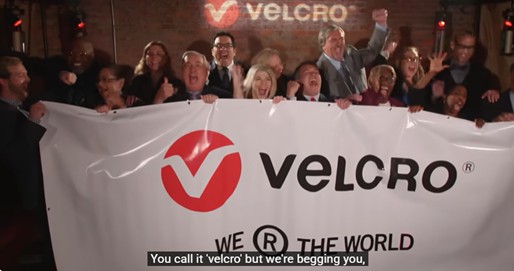
- Monitor the usage: monitor, police and record all third-party usage of the mark stringently and ensure action is taken against any misuse. A fast and strict approach to trade mark infringement issues from the outset can ultimately pay off in the long run. Ensure all paid social media content uses the brand name correctly either in video/image content, in the post’s caption or as hashtags. Social media posts reach people faster and more expansively than ever before, and can quickly exacerbate confusion between product and category, mis-naming or genericide. Ensure that usage is monitored across platforms and take swift action to correct the influencers/ambassador, contact the third party using the incorrect name, or contact the platform to get content removed. Ensure that the brand name is used correctly in other paid or unpaid forms of marketing such as editorials and take steps to correct authors or journalists if it is not.
- Broaden product ranges where appropriate: a common pitfall to genericide is where the relevant trade mark is used in relation to only one product. Launching ranges of products rather than relying on ‘the hero product’ that uses the threatened brand name can help to reduce the risk of genericide.
Genericide in recent court decision
Lewis Silkin was recently involved in one of the few cases concerning genericide to reach trial in the UK, representing the defendant. Dryrobe v Caesr Group (t/a D-Robe) [2025] EWHC 3167 (IPEC) was a trade mark infringement and passing off case brought by Dryrobe in the Intellectual Property Enterprise Court against D-Robe. The defendant counterclaimed that the claimant’s marks for DRYROBE should be revoked pursuant to sections 3(1)(b), (c) and (d) of the TMA, but also section 46(1)(c) as the term had become generic.
Dryrobe is a well-known brand of outdoor robes, typically used by surfers, wild swimmers and beachgoers to keep them warm, dry and change underneath them. D-Robe’s brand was conceived and developed during 2021, and launched in 2022 selling warm, waterproof coats to be used for a range outdoor activities and urban wearing. The brand became prominent during the Covid lockdowns when more people turned to ‘staycations’ and permitted outdoor activities.
Dryrobe’s claim for infringement and passing off succeeded, but of particular interest to this article is the Judge’s finding that the DRYROBE marks had not become generic. The Court stressed the need for cogent evidence and noted the heavier burden upon proprietors of descriptive marks, whilst recognising that robust anti genericide measures can avert revocation. Despite evidence of some public generic use by November 2024, the court held that DRYROBE had not become the common name in the trade; it still functioned as an indicator of origin and retained a medium level of distinctiveness. Key to the claimant’s success was its evidence that it had taken rigorous steps since 2019/2020 to combat generic use such as: online brand protection and utilising internet crawling technology; correcting media uses where the brand Dryrobe had been used to describe the product instead of ‘changing robes’; creating marketing material to educate the public and actively searching social media for uses of ‘dryrobe’ or ‘#dryrobe’ when describing the product to seek corrections. The court said that these were “relentless efforts” to combat genericide, allowing Dryrobe not only to retain its marks but to succeed in its claim against a competitor.
Final thoughts
Failure to adequately manage your trade marks increases the likelihood that the risks identified in this article will materialise. Regular monitoring and periodic review of your marks, together with the measures we recommend to guard against genericide, are essential to retain a brand’s distinctiveness and legal enforceability.
Feel free to get in touch with us if you want to discuss genericide or any other intellectual property issues. With thanks to Chloe Ilsley for contributing to this article.
