


Over millions of years, evolution has produced the diverse, weird and wonderful ecosystem our planet boasts today. It is no surprise, then, that scientists have long looked to nature to develop and improve our own technology. This approach is known as "bioinspiration": studying solutions that have evolved in nature and recreating them in engineered materials, structures and designs.
But this raises a question: how can scientists and inventors make sure their bioinspired inventions are properly protected? Registered intellectual property (IP) rights, such as patents and registered designs, require novelty. In other words, the invention must not have been made public before the application is filed. So how does this work when nature may have "disclosed" the underlying idea long before humans were able to adapt it for modern use?
The IP Problem: Protecting What Nature Already Made
Patents are rigorously tested for novelty and inventiveness against everything that has previously been made public (the prior art), with registered designs also requiring novelty over the prior art.
This leads to an obvious question: if a shape, structure or compound already exists in nature, can it still be protected?
As the case studies below show, the answer can be, thankfully, yes. Even where the underlying structure is known, protection may still be available for applying it in a new industry, for the modifications or adaptations made to it, or for the manufacturing method used to reproduce it.
Burdock Burrs
Swiss engineer George de Mestral was out walking his dog when he noticed burrs from the burdock plant clinging to his dog's fur. Curious about how the burrs were sticking to the fur, de Mestral examined them under a microscope and identified an interlocking mechanism between the tiny hooks at the ends of the burrs and the loops in the dog's tangled fur. Crucially, there was no one-to-one match between hook and loop. Instead, the load was spread across a large number of tiny contact points, which together created a strong shear force.
De Mestral set out to commercialise the idea in the textile industry, but cotton fibres frayed too easily. He then found that nylon, a newly invented material, could be formed into small hooks and loops by weaving it under heat and then shearing it. In 1951, de Mestral filed a Swiss patent application, granted in 1954, and a US patent covering both the hook-and-loop fastener fabric and the method of making it followed in 1955. The invention eventually became the well-known VELCRO® brand hook-and-loop fastener.
Although the fastening mechanism could be seen in nature, de Mestral had found an ingenious way to reproduce it in a durable, non-biodegradable form, using a material not previously used for this purpose. Although the idea came from nature, patentability arose from the manufacturing process used to reproduce it and from applying the concept with new materials.

The Gecko's Foot
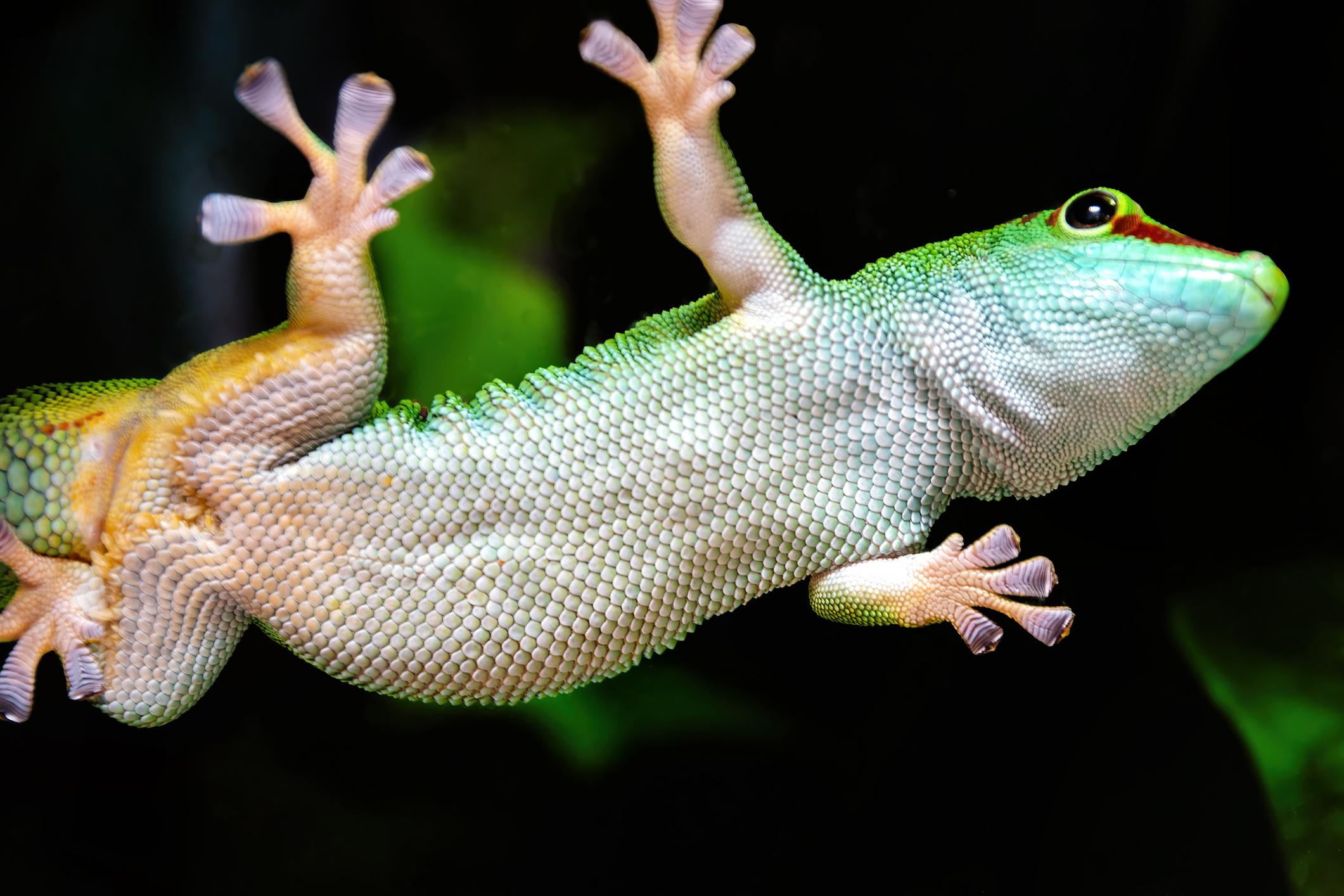
If you have ever watched a gecko scurry up a wall, you have probably wondered how it appears to defy gravity. Early theories pointed to tiny suction cups, mechanical interlocking, or static electricity, but scanning electron microscopes eventually revealed the real answer. A gecko's toes are covered in millions of microscopic hairs (setae), each 30 to 130 microns long and ending in even tinier tips (spatulae) just 0.2 to 0.5 microns wide. Together, these create strong but reversible adhesion through weak molecular attractions known as van der Waals forces. The angle of the hairs is key: below about 30°, the tips hold firm; above 30°, they peel away one row at a time, like tape. Most importantly, this is a dry adhesive, with no glue required, giving it wide-ranging potential applications in robotic grippers, reusable and residue-free adhesive tapes, and even medical tissue adhesives.
Inventors have since sought protection for this technology in different ways. US10307941, for example, covers a method of producing a dry adhesive structure from polymers alone, which mimic the seta and spatulae structure.
By contrast, US7011723 was originally filed with a claim to removing setae from a biological sample and applying them to another surface. The US Patent and Trademark Office (USPTO) rejected this claim because it covered a naturally occurring process, stating that the claims were "not directed to a new and useful process, machine, manufacture or composition." The claims eventually allowed in the US covered the use of artificial setae, while those in Europe covered the method of manufacturing the artificial microstructure.
This highlights a limit to patenting bioinspired inventions: simply using biological materials as they are will not be enough. Inventors must show something novel, such as a new process or method for recreating the natural feature in an artificial format.
Humpback Whale Blades
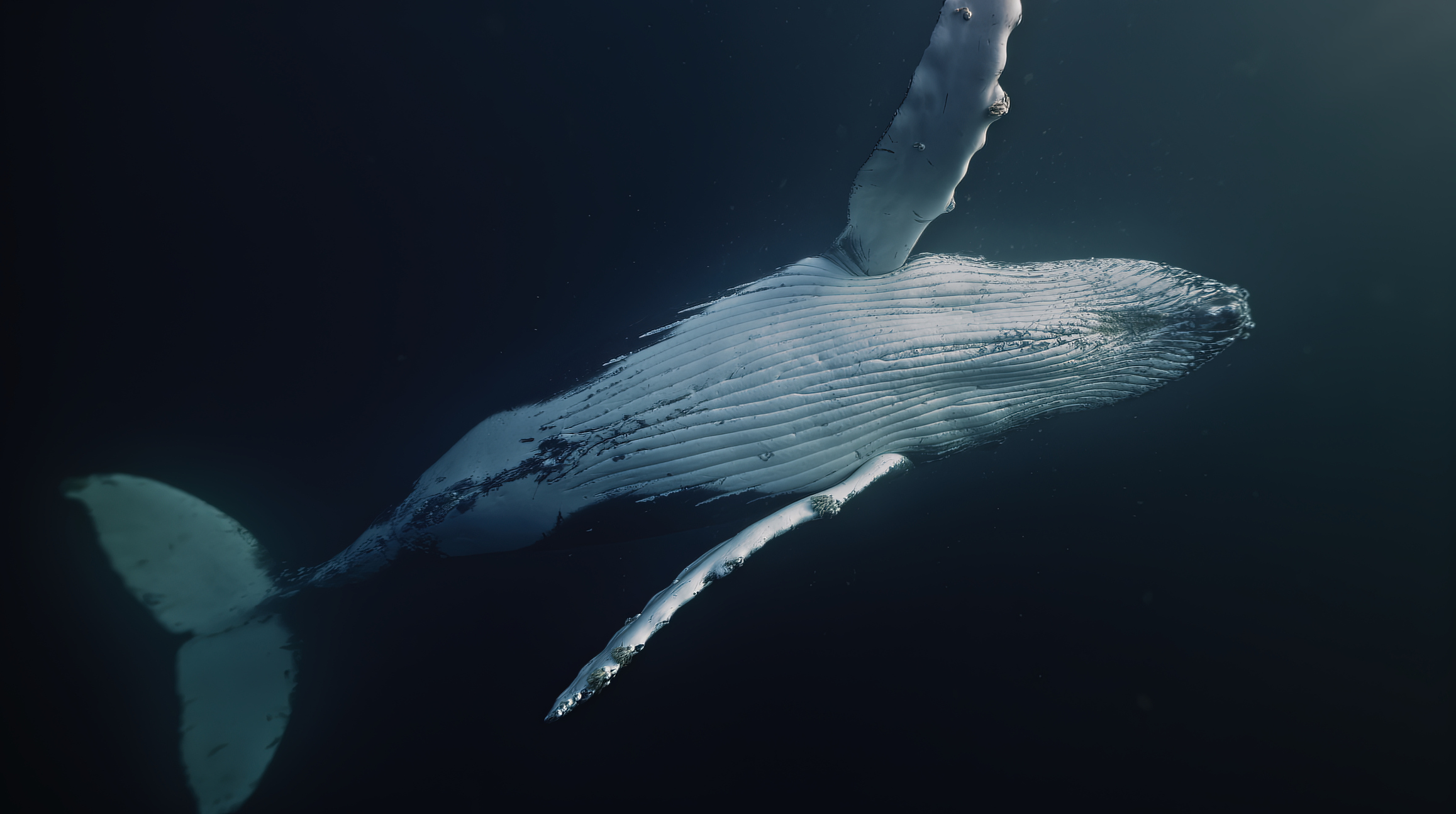
Despite being one of the largest mammals on Earth, the humpback whale is surprisingly agile, able to twist and turn through the water with remarkable grace. Its secret lies in the bumps (tubercles) along the leading edge of its flippers, which improve lift and manoeuvrability. The bumps work by breaking up unwanted swirls of water (vortices), reducing drag and increasing lift.
Biologist Frank Fish and aeronautical engineer Philip Watts applied this idea to wing and blade design. In June 2000, they filed a US patent application, which was granted in August 2002 as US 6431498. The patent claims a wing, and a method of configuring one, in which the leading edge carries a series of forward-extending protrusions (scallops) that give increased lift over drag compared with a similar wing with a straight leading edge. To commercialise the idea, the pair co-founded WhalePower, licensing its tubercle designs to other companies. In 2018, Fish and Watts, together with WhalePower co-founder Stephen Dewar, were named finalists for the European Patent Office's European Inventor Award in recognition of this work. According to the European Patent Office, the resulting tubercle technology can help wind farms produce up to 20% more power and increase airflow in industrial fans and blowers by up to 25%.
Applying the shape of a whale flipper to a wind turbine was considered novel as this configuration had not been seen in the wind turbine industry. What is more, it went against conventional thinking as aerodynamic engineers had long believed that the leading edges of propellers, blades and turbines should be as smooth as possible to reduce air resistance. Overcoming such a prejudice in the field is a typical indicator of a strong inventive step, supporting the invention's patentability.
Kingfisher Bullet Train
The elusive kingfisher, famous for its striking blue plumage and breakneck speed, caught the attention of Eiji Nakatsu, the JR West engineer responsible for test runs of the new 500 Series Shinkansen and a keen birdwatcher. He noticed that the bird dives from air into water with barely a splash, moving from a low-resistance medium into a high-resistance one, and that this was exactly the challenge a high-speed train faces when entering a tunnel.
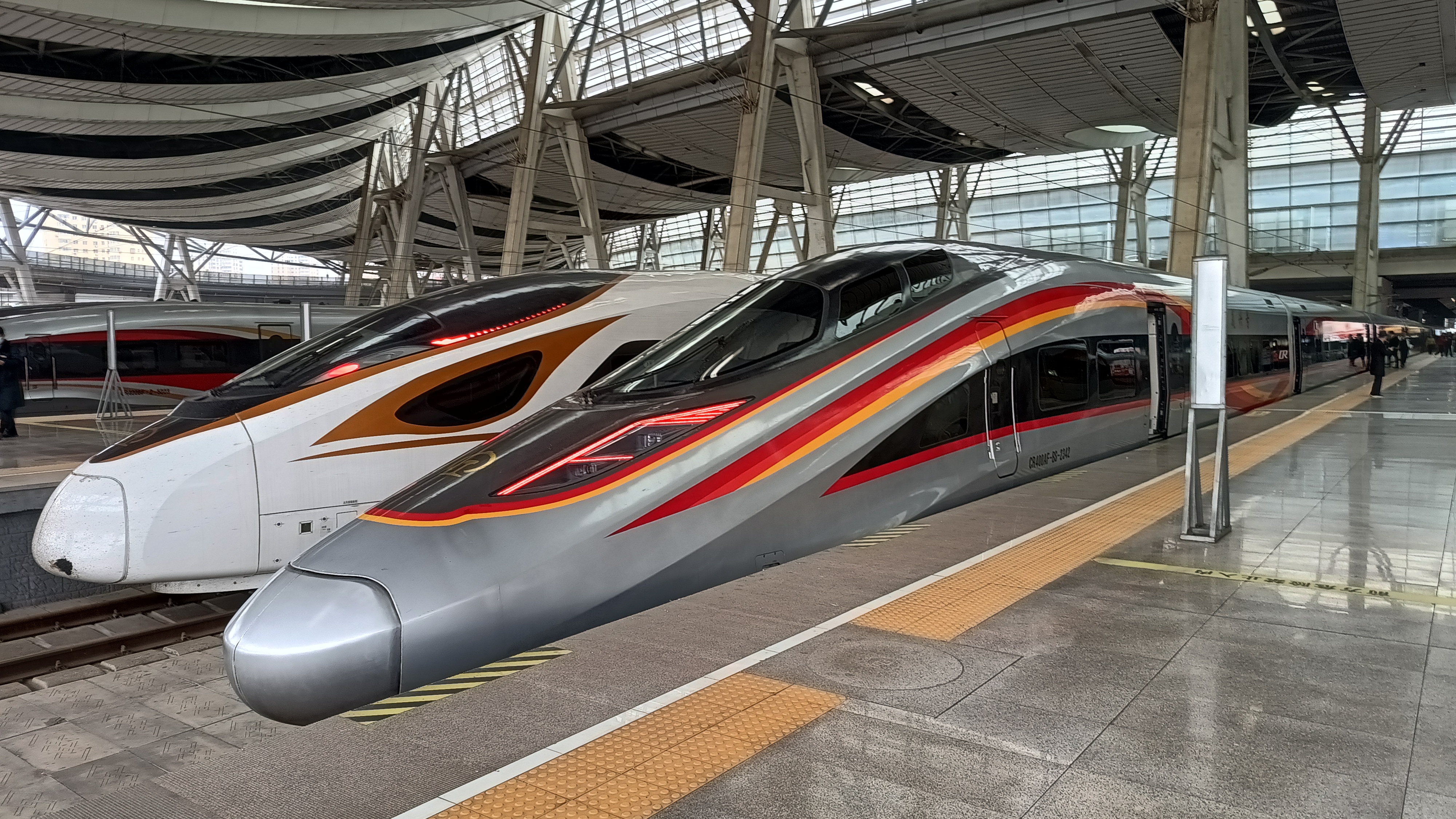
Inspired by Nakatsu's observations of the kingfisher, his team shaped the nose of the 500 Series Shinkansen to mimic the bird's beak. The new design, which entered commercial service in 1997, reportedly reduced the "tunnel boom" and cut air resistance by about 30%, with reported energy savings of around 13 to 15%.
The Shinkansen story shows that patents are not the only IP right available for protecting bioinspired concepts. For a train who's sleek, beak-like nose is instantly recognisable, that appearance is valuable, and Shinkansen nose shapes have been protected by registered designs, including JP 1638210 and JP 1590897. Like patents, registered designs must be novel, and the Shinkansen train noses differed significantly from the bird beaks that inspired them, indicating that taking inspiration from nature and applying these teachings and designs to an entirely different technology can result in protectable designs.
Conclusion
As some of the examples above show, bioinspired technologies and designs can be protected, whether through using existing concepts with new materials, developing new manufacturing methods, or putting nature's designs to work in entirely new fields.
Bioinspired innovation shows no sign of slowing down, and even recently, the SMEs category of the European Inventor Award 2026 was won by an organ-preservation technology derived from marine worms. There is clearly much still to learn from the natural world and, thankfully for keen nature lovers, the message is clear and reassuring: the legal framework exists to protect your ideas, even when they are inspired by nature.


