


The commercial halo around a major sporting event can be every bit as valuable as the spectacle itself. That was the point at the heart of Automobile Club de l'Ouest v Omologato Ltd and another [2026] EWHC 2265 (IPEC), where the organiser of the world's most famous endurance race objected to a watchmaker's use of LE MANS, LM and LMR for motorsport-themed watches. The IPEC found that the watchmaker had infringed ACO's trade marks, that its director was jointly liable, and that the director's own LMR registration was invalid.
The background
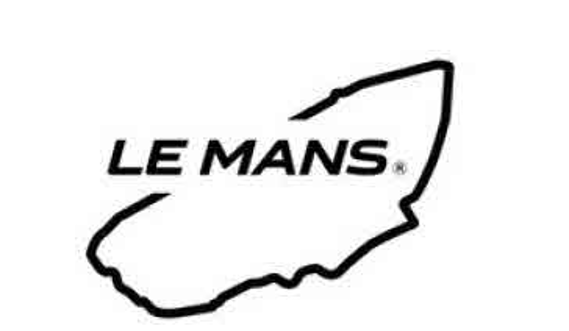
Automobile Club de l'Ouest (ACO) has organised the 24 Hours of Le Mans for over 100 years. Omologato designs and sells motorsport-themed watches, and had used LE MANS, LM and LMR across product names, watch faces, advertising and social media. ACO issued proceedings alleging trade mark infringement arising from Omologato's use of LE MANS, LM and LMR in connection with its motorsport-themed watches. It relied on trade mark registrations for 'LM', a LE MANS logo that includes an outline of the race circuit, and '24H LE MANS'. The case centred on whether Omologato had infringed ACO's registered marks.
What the court decided
The court found straightforward infringement in Omologato's use of LM on watches: ACO owned a trade mark for LM registered for, among other things, watches, and Omologato used an identical sign (LM) as an indication of origin for watches, which are identical products. That was the only identity claim; ACO did not run an identity claim on its LE MANS logo mark, which combines the words with the circuit outline and so is not identical to the plain words LE MANS. Instead, the court found Omologato's LE MANS sign very similar to the LE MANS logo mark and highly similar to the 24H LE MANS mark, with identical products, such that there was a likelihood of confusion. LE MANS was the part consumers would notice and say, and in the 24H LE MANS mark it was the dominant and distinctive element. The circuit outline is not pronounced and serves to emphasise LE MANS, so neither it nor "24H" detracted from the overall similarity.
The LMR finding turned on context. Standing alone, adding an R to LM might have seemed a modest change. Used alongside Le Mans references and racing imagery, and adopted after ACO objected to LM, it took on a different character. The judge considered that consumers would understand LMR as "Le Mans Race" and, in context, would assume some commercial connection with ACOa. For the same reason, Mr Kalra's LMR registration was declared invalid under the Trade Marks Act 1994, on the basis of ACO's earlier LM mark.
Reputation and free-riding
ACO had little trouble showing that Le Mans is well known in the UK. The evidence included UK spectators, ticket sales, broadcasts, British driver success and the race's centenary coverage. The court saw Omologato's branding as using the pull and prestige of Le Mans to sell watches, with the motorsport theme forming part of that commercial association.
Omologato's main answer was that it had sponsored teams and drivers connected with ACO races, and that no one had expressly told it not to use the Le Mans name. The difficulty was evidential as much as legal. If that argument was going to work, the judge expected to see the contractual chain: permission from ACO to the relevant team, followed by a right for that team to pass the benefit on to Omologato. No such agreements were produced.
ACO's evidence said the opposite: its team agreements restricted use of the Le Mans marks, including in relation to watches. That was not surprising: Rolex has been the Official Timepiece of the 24 Hours of Le Mans since 2001, and the connection is made very visible by the engraved Oyster Perpetual Cosmograph Daytona awarded to winning drivers. Against that backdrop, Omologato's permission case was very hard to sustain.
The attempt to characterise the use as merely referential fared no better. A reference to someone else's event can be legitimate, but the court was looking at the whole presentation: product names, promotional copy, racing imagery and the absence of any licence from the event organiser. In that setting, the use looked like ambush marketing, not a fair description of a motorsport theme.
The sting in the tail
The case is also a useful reminder that the protection of limited liability does not necessarily shield a director from personal liability for a company's trade mark infringement. Following Lifestyle Equities v Ahmed, the question is whether the director has personally participated in the tort in the manner required for accessory liability, including with knowledge of the essential features of the tort.
Mr Shami Kalra, Omologato's director and the second defendant, represented himself in the proceedings. The judge described him as the controlling mind of Omologato, and his role went well beyond general involvement in the business: he designed and named the watches, wrote or approved the advertising, dealt with ACO's pre-action correspondence, requested a licence from ACO, directed the litigation and owned the LMR mark in his own name. The court found that he knew the essential facts underlying the infringements and was jointly liable with Omologato.
Practical takeaways
- Event-adjacent branding is not automatically unlawful, but context is everything. The risk rises sharply where the overall presentation borrows the commercial pull of the event.
- Sponsoring a team is not the same as permission from the event organiser. If you are relying on a chain of consent, check the agreements.
- A later trade mark registration may not help. If it was filed in response to an earlier rights problem, expect it to be attacked.
- Directors should also take care. Naming products, approving copy and holding the contested mark personally can make the dispute personal too.


