


In a recent UKIPO opposition decision, Shiseido Americas Corporation ("the Applicant") successfully defended oppositions brought by Socium Distribution Limited ("the Opponent") to four 3D trade mark applications for its skincare packaging, allowing all four applications to proceed to registration.
The decision is noteworthy as it considers how the absolute grounds apply to 3D marks combining a container shape with words, a figurative element and colours. Interestingly, it also provides a reminder that the decision to introduce settlement correspondence as evidence should be considered carefully.
Background
Each of the four applications is a 3D mark filed with five or six photographic representations showing the container from different perspectives. One representation of each mark is shown below.
On 20 June 2024, the Applicant filed application number UK00004066057 ("the 6057 Application"), published on 5 July 2024, for face creams, cosmetics, beauty serums and related goods in Class 3 and related retail services in Class 35. The representations include the words "Protini" and "Polypeptide Cream".
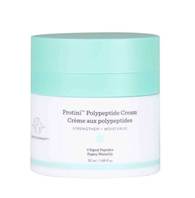
6057 Application (representation 1 of 5)
On 1 July 2024, the Applicant filed application number UK00004070294 ("the 0294 Application"), published on 12 July 2024, for Class 3 goods, including moisturizing creams and face masks, and related retail services in Class 35.
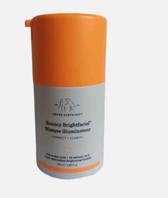
0294 Application (representation 4 of 6)
On 1 July 2024, the Applicant also filed application number UK00004070286 ("the 0286 Application"), published on 12 July 2024, for Class 3 goods and related retail services in Class 35.
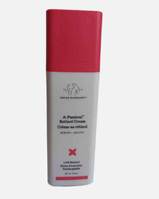
0286 application (representation 4 of 6)
On 20 June 2024, the Applicant filed application number UK00004066046 ("the 6046 Application"), published on 26 July 2024, for Class 3 goods and related retail services in Class 35. The representations include the words "Lala Retro" and "Whipped Cream".
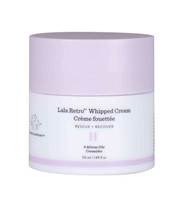
6046 application (representation 1 of 5)
The Oppositions
The Opponent filed oppositions against the Applications over the course of October 2024. Each relied on sections 3(1)(a), (b), (c) and (d) of the Trade Marks Act 1994 ("the Act") and sought to attack the ability of the trade marks applied for, to act as a badge of origin for the Applicant. The Applicant filed Forms TM8 and counterstatements denying the claims.
Proceedings were consolidated and both parties filed evidence, summarised below:
- The Opponent's evidence: On 17 June 2025, the Opponent filed a witness statement, given by a Director of the Opponent that introduced a list of images of moisturising creams with product name, brand and date on sale, to demonstrate that "such shaped containers with brightly coloured lids are widespread in the industry".
- The Applicant's evidence: On 18 August 2025, the Applicant's representatives filed a witness statement. This showed two UK registered 3D marks that the Hearing Officer said could be considered similar to the applications. It also showed registrations for the word marks DRUNK ELEPHANT, PROTINI, BRIGHTFACIAL, A-PASSIONI and DRUNK ELEPHANT LALA RETRO, and for figurative marks matching the elephant picture.
- The Opponent's reply evidence: On 20 October 2025, the Opponent's representative filed a witness statement that introduced a letter regarding settlement negotiations between the parties. The parties disagreed as to the nature of the letter and by extension, its admissibility as without prejudice correspondence, but the Opponent claimed that the letter was instructive of the Applicant's intention to protect "the generic shape and common colours" of the products.
The Parties' Arguments
The oppositions were decided on the papers, with no hearing.
Section 3(1)(a)
Relying on Dyson (Case C-321/03), the Opponent argued that the applications sought to "monopolise an infinite number of signs". It also argued that the Drunk Elephant logo and name were only partly visible in the first and fourth applications.
In response, the Applicant argued that it sought to protect the specific placement of colour and wording on the shapes, and it would have filed for shape or colour alone had that been its aim.
Sections 3(1)(b) and (c)
The Opponent argued that the cylindrical or rectangular containers did not depart significantly from industry norms, colour is rarely distinctive without prior use, and the remaining features were descriptive. It also argued that beauty products are often sold in cylindrical or rectangular containers.
In response to both grounds, the Applicant argued that the marks were distinctive as a whole, particularly because of the names, the DRUNK ELEPHANT mark and the logo.
Section 3(1)(d)
Relying on the same point that beauty products are often sold in cylindrical or rectangular containers, the Opponent argued that the shapes were customary in the trade.
In response, the Applicant argued that the Opponent's evidence gave no representative sample of the sector, so its norms were not established.
Decision
On 27 August 2026, John Williams rejected all four oppositions on 27 August 2026:
- Settlement letter: He found "no basis" for the Opponent's argument, because the settlement letter said nothing about how the Applicant had responded.
- Section 3(1)(a): He said the marks were "a long way from" Dyson, which was about protecting every conceivable shape of a collecting bin. The marks at issue were specific shapes with specific words, a specific logo and specific colours. The words being slightly squashed by the curve of the container did not stop the marks being clear and precise, in the Hearing Officer's view. The marks were also capable of distinguishing goods.
- Section 3(1)(b): The average consumer is a member of the public paying a medium level of attention. DRUNK ELEPHANT and the elephant picture do not describe the goods, so the marks were not devoid of distinctive character. "Protini", "A-Passioni" and "Lala Retro" were also non-descriptive, but secondary to the brand name and logo.
- Section 3(1)(c): Looking at each mark as a whole, it did not consist exclusively of descriptive signs.
- Section 3(1)(d): He did not decide whether the Opponent's evidence was good enough, or whether the containers were typical of the trade. The added words, logo and colours meant the marks were not made up only of customary signs.
- Costs: He ordered the Opponent to pay £2,000 on the published scale.
Did the Hearing Officer err?
While these points may not necessarily have changed the result, the following are worthy of note:
Assessment of overall impression
Earlier decisions on 3D marks generally ask whether the shape departs significantly from the norms of the sector, and the Opponent relied on that test (Jaguar Land Rover, Freixenet). The Hearing Officer did not apply that test at all and relied entirely on the words and logo. That is usually fine when a word element is prominent. However, even though the Hearing Officer accepted the words were compressed and seen side-on in two of the marks, he did not ask how noticeable the words DRUNK ELEPHANT were on each container. The case law expects an overall impression assessment of how visible each element is, and to these co-authors at least, it appears that assessment did not occur here. Ultimately, this is a judgment call.
The settlement letter
The decision records that the letter came out of negotiations and that the Applicant regarded it as without prejudice. Even so, it was admitted simply because the Opponent called it "open". Under the established case law on without prejudice protection (e.g. Rush & Tompkins and Unilever v Procter & Gamble), whether that protection applies depends on what the letter actually is, not the label put on it. Where the protection applies, it belongs to both parties, so one side cannot normally waive it alone. In the end, the Hearing Officer gave the letter no weight, but he did not explain why it was admitted in the first place.
Practice Points
When applying for protection of 3D product packaging, put the brand on the pack and make it prominent:
The Applicant defended the Oppositions because in the Hearing Officer's view, the words DRUNK ELEPHANT and the Elephant logo were visible in all four Applications.
Consider enforcement value before filing:
These registrations protect the combination of elements, resulting in fairly narrow infringement rights. They are unlikely to stop a competitor using a similar white tub with a bright lid under a different brand. If the shape or colour scheme itself matters to you, think about separate shape or colour filings, registered designs, or building evidence of acquired distinctiveness.
File several views of the packaging:
Five or six photographs from different angles helped show a clear and precise mark. Check that the brand name is legible on curved surfaces in each view.
Be careful introducing settlement correspondence as evidence:
A one-sided offer letter tells the tribunal nothing about what the other side thinks. It is also likely to raise privilege arguments and add cost.


